The Singularity
Collaboration with: Freeman Murray
Location: Yelahanka, Bangalore
Typology: Organic settlement
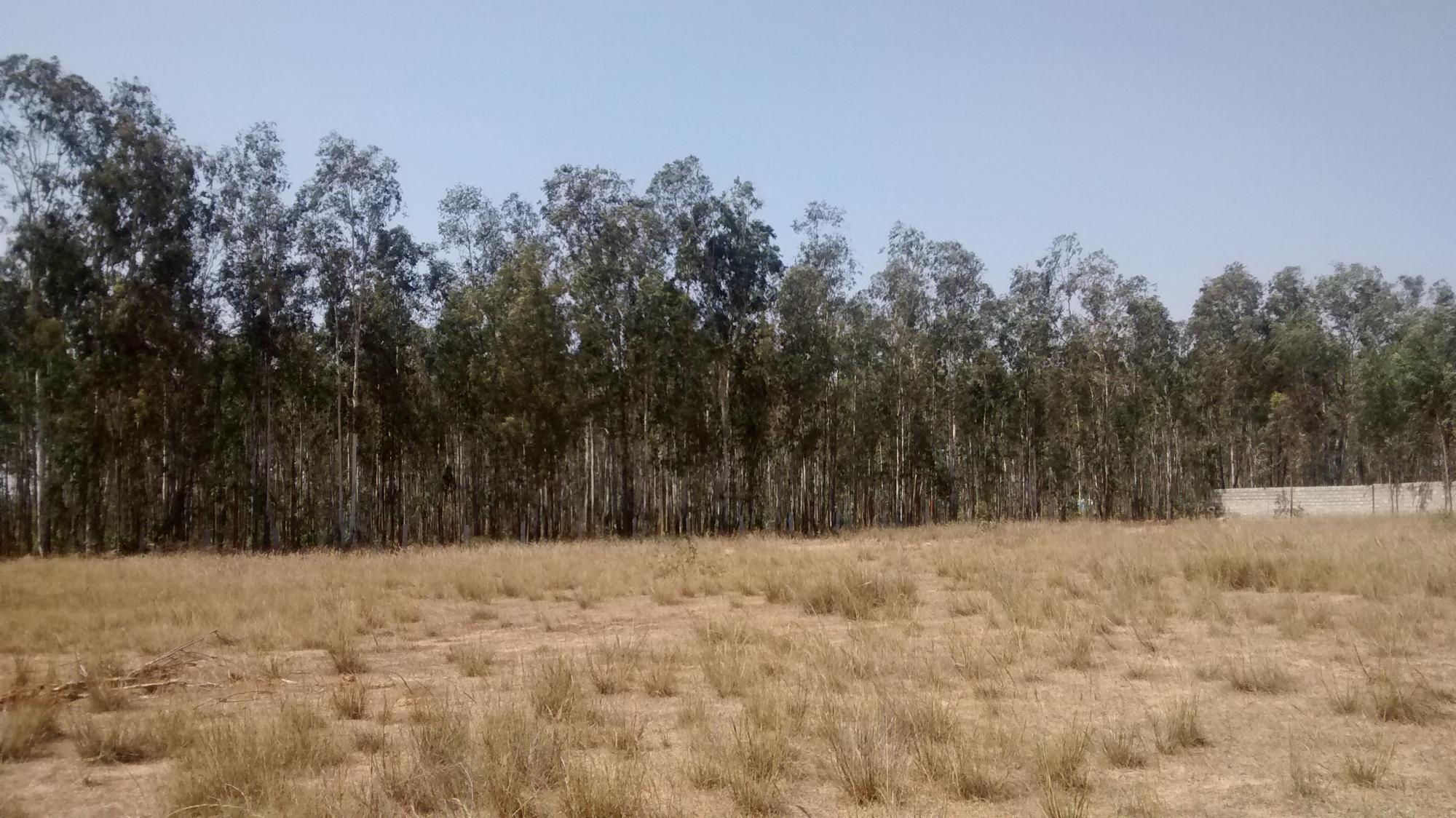
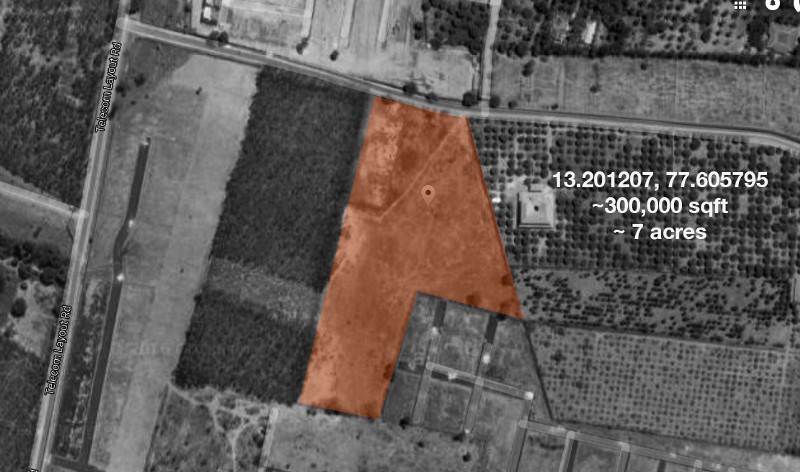
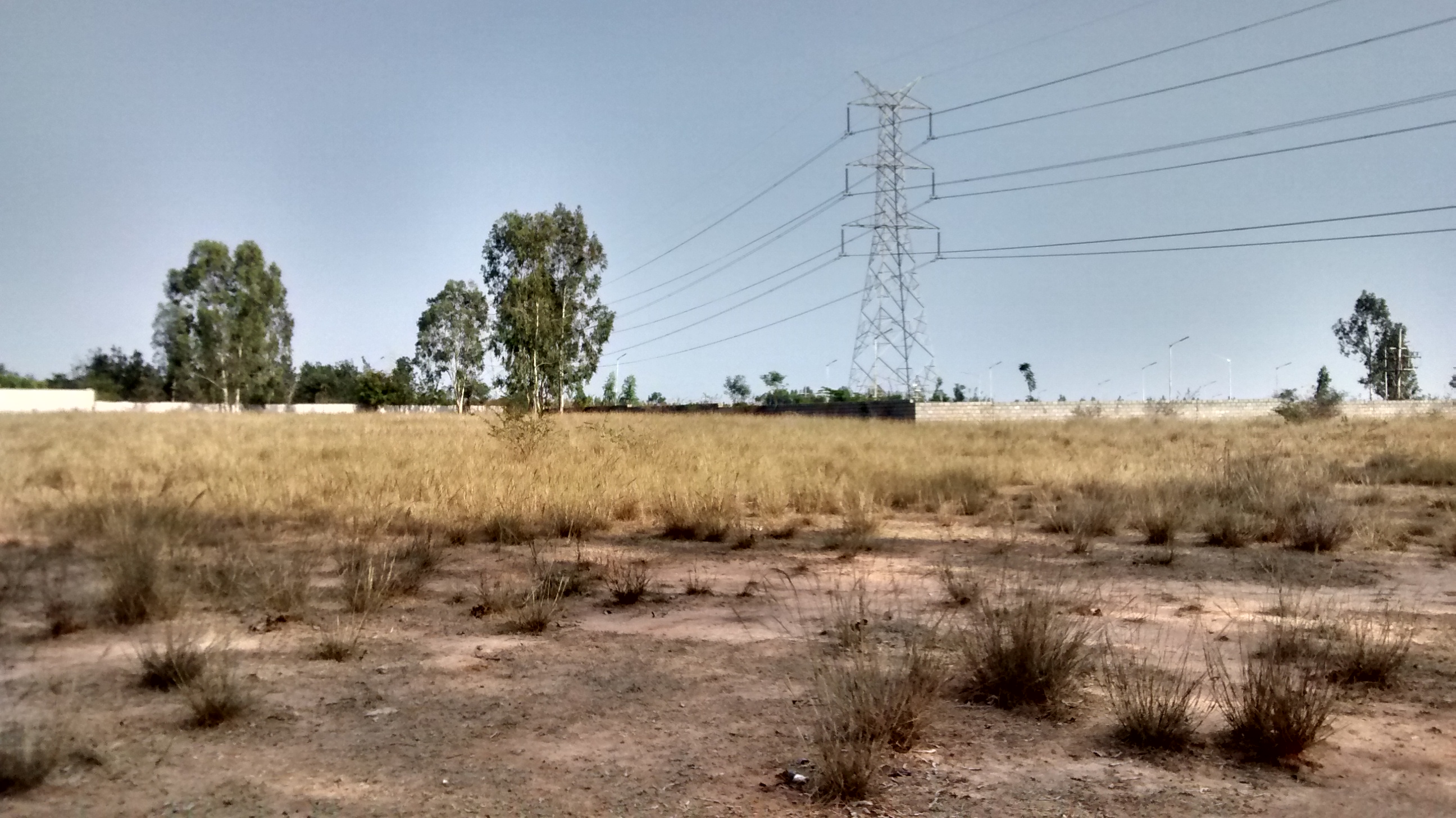
Satellite and ground views of the unoccupied site in Yelahanka.
Introduction
You’re given seven acres of land to play with. The land has only flat shrubbery in place, and you’re looking to build the seed of a community that can grow over time. It’s a mad brief for an architect to get. My first reaction was to abandon all sense of responsibility and see what could be done at scale.
The Singularity was meant to extend what Jaaga had been doing on many farms in peri-urban Bangalore. I had lived in the structure built at Hamsah Organic Farm and helped set up one of these structures in October 2016. The stack used pallet racks, plywood sheets, tensile ropes, and shade cloth.
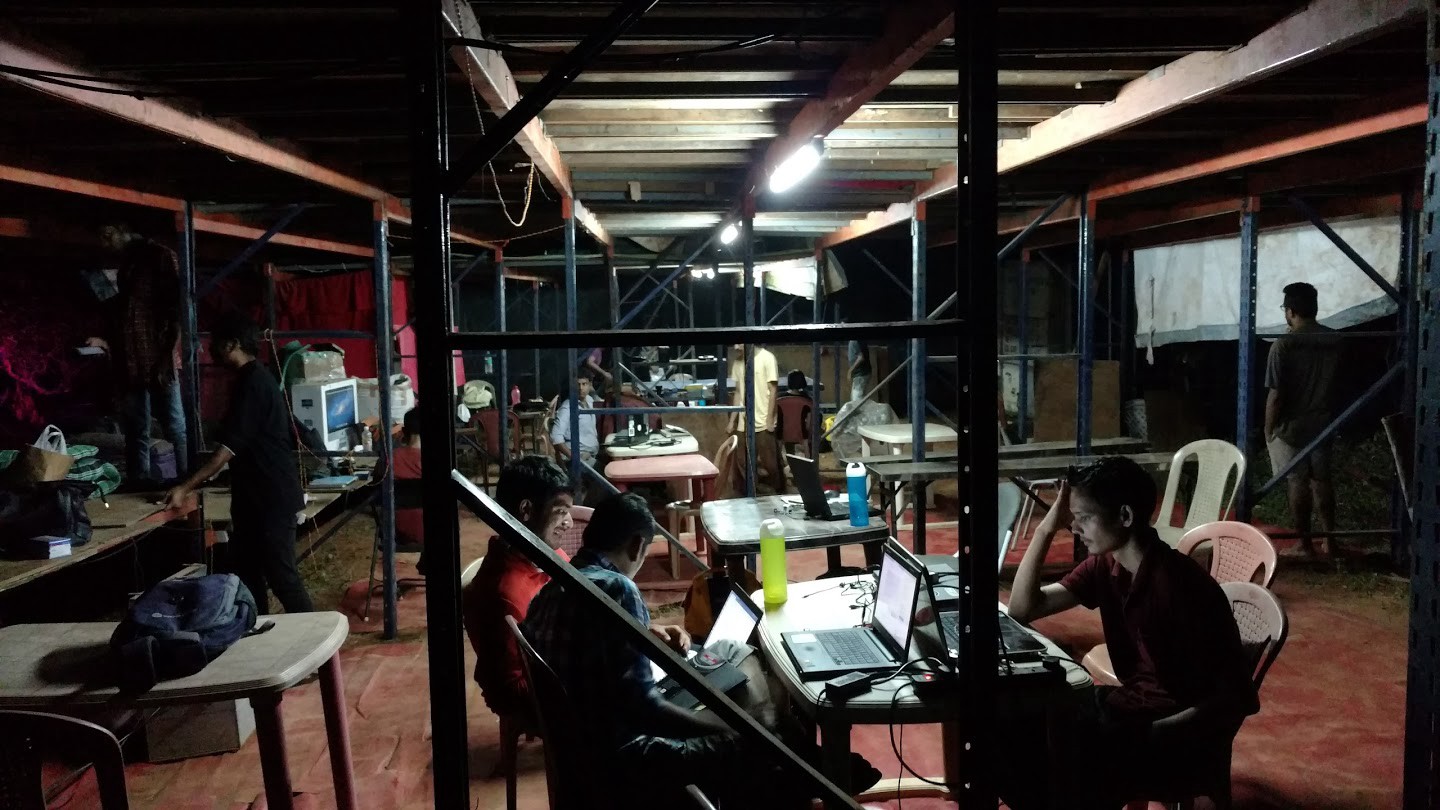
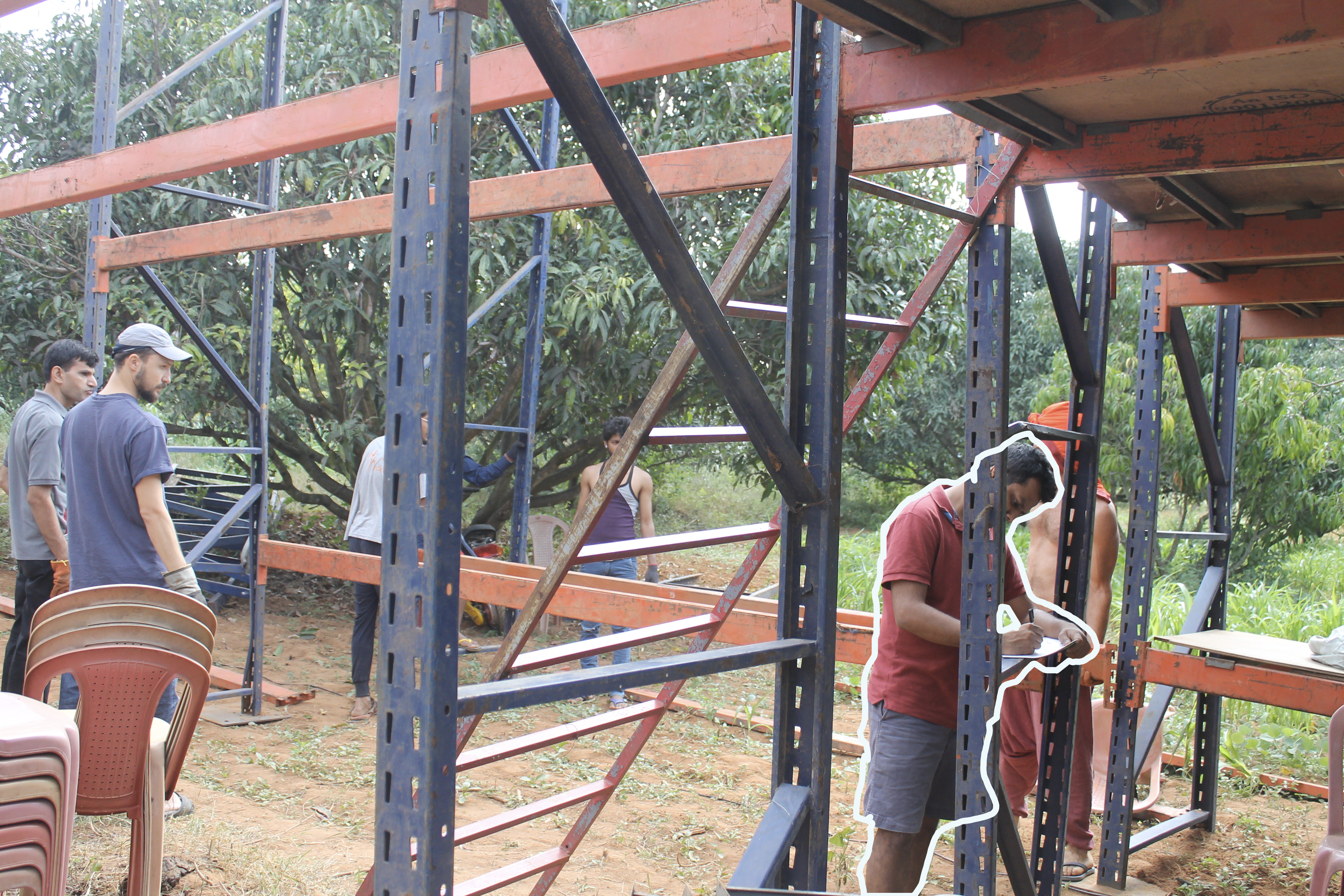
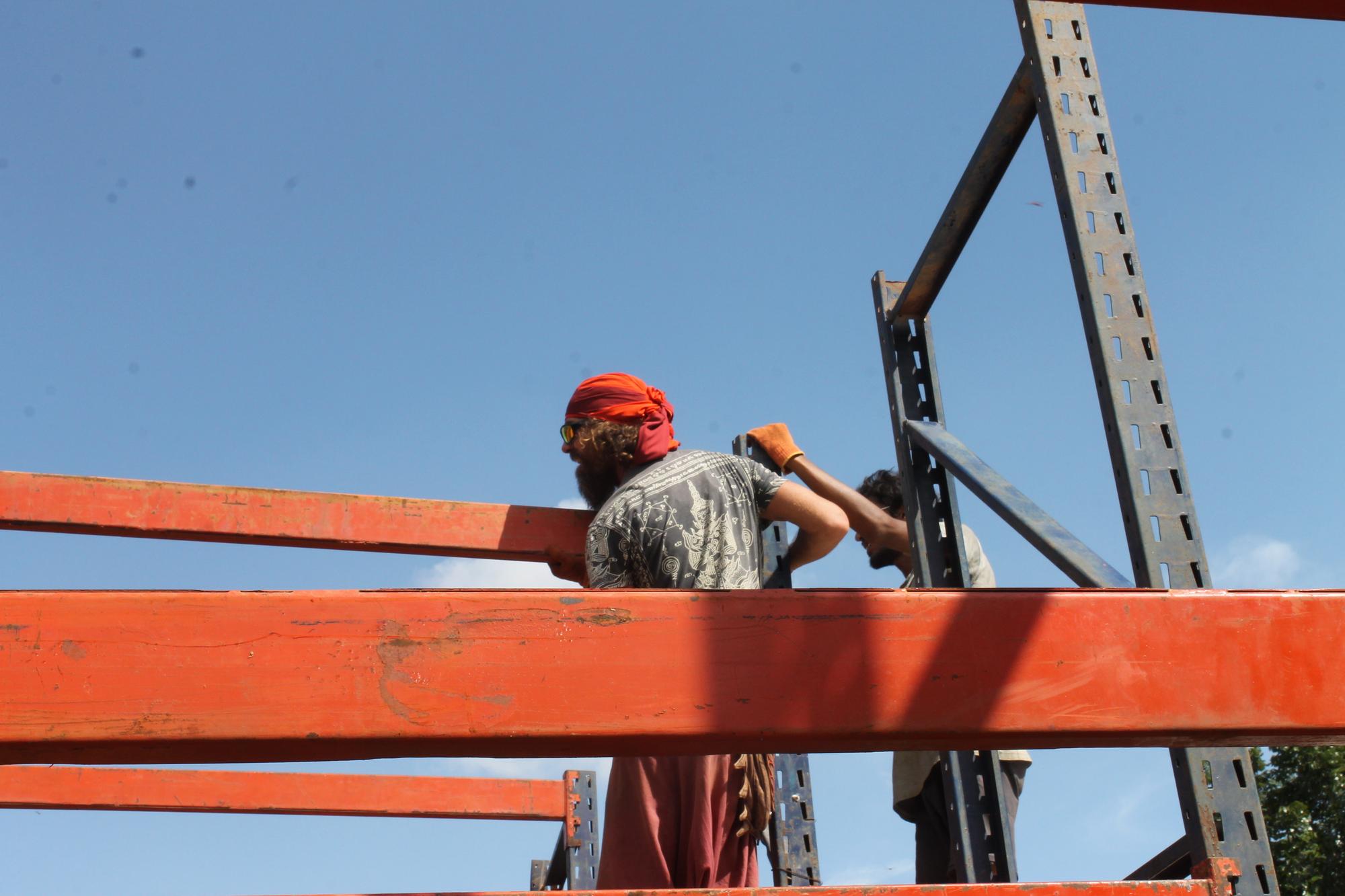
The process and outcome of setting up one of these structures. I’m highlighted in white in the first photograph. Sources: the author and Freeman Murray.
Context
All the parts mentioned here pack into a shipping container, which allows a kind of nomadism. Jaaga had been building these structures since 2009, and over time it fine-tuned what was needed. Concerns over stability were addressed with giant screws for a foundation, a rare kind of foundation that can be removed and used again.
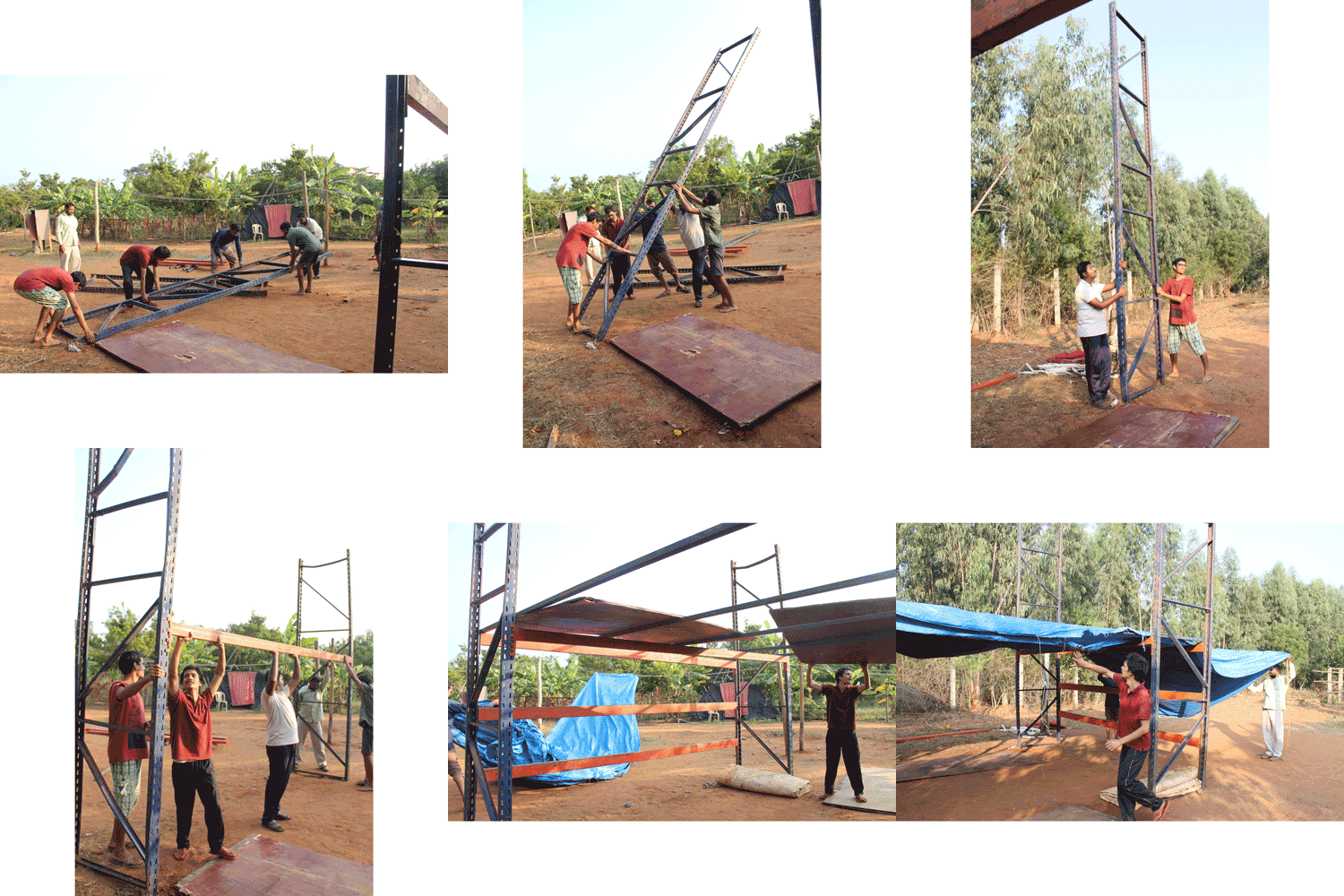
A time-lapse of setting up a structure for a meditation retreat.
Intent
Jaaga had typically received portions of land on farms to inhabit. The context was the natural greenery, and the work had to fit within the space available. With The Singularity, for the first time, a whole farm was available. With this freedom came the chance to establish our own context.
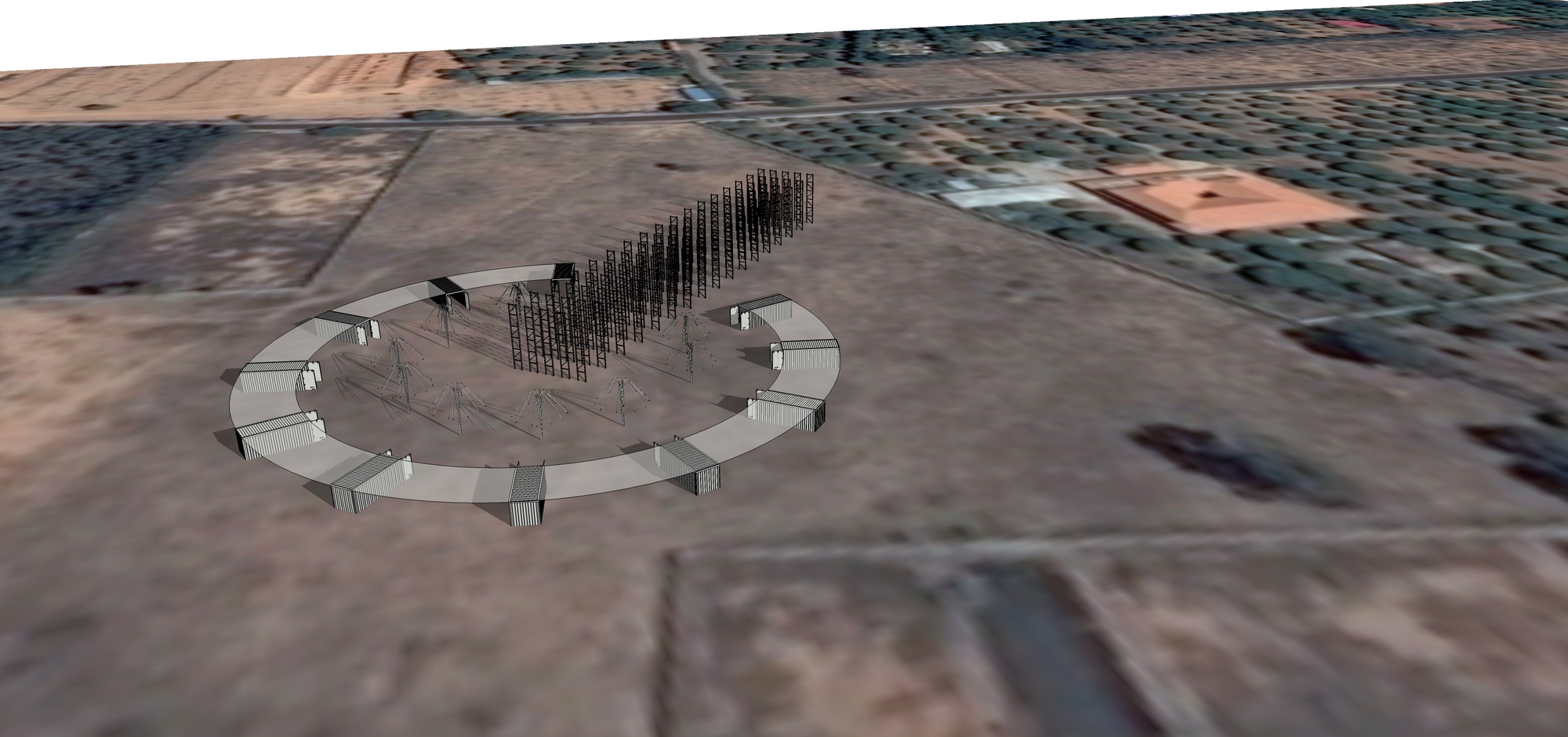
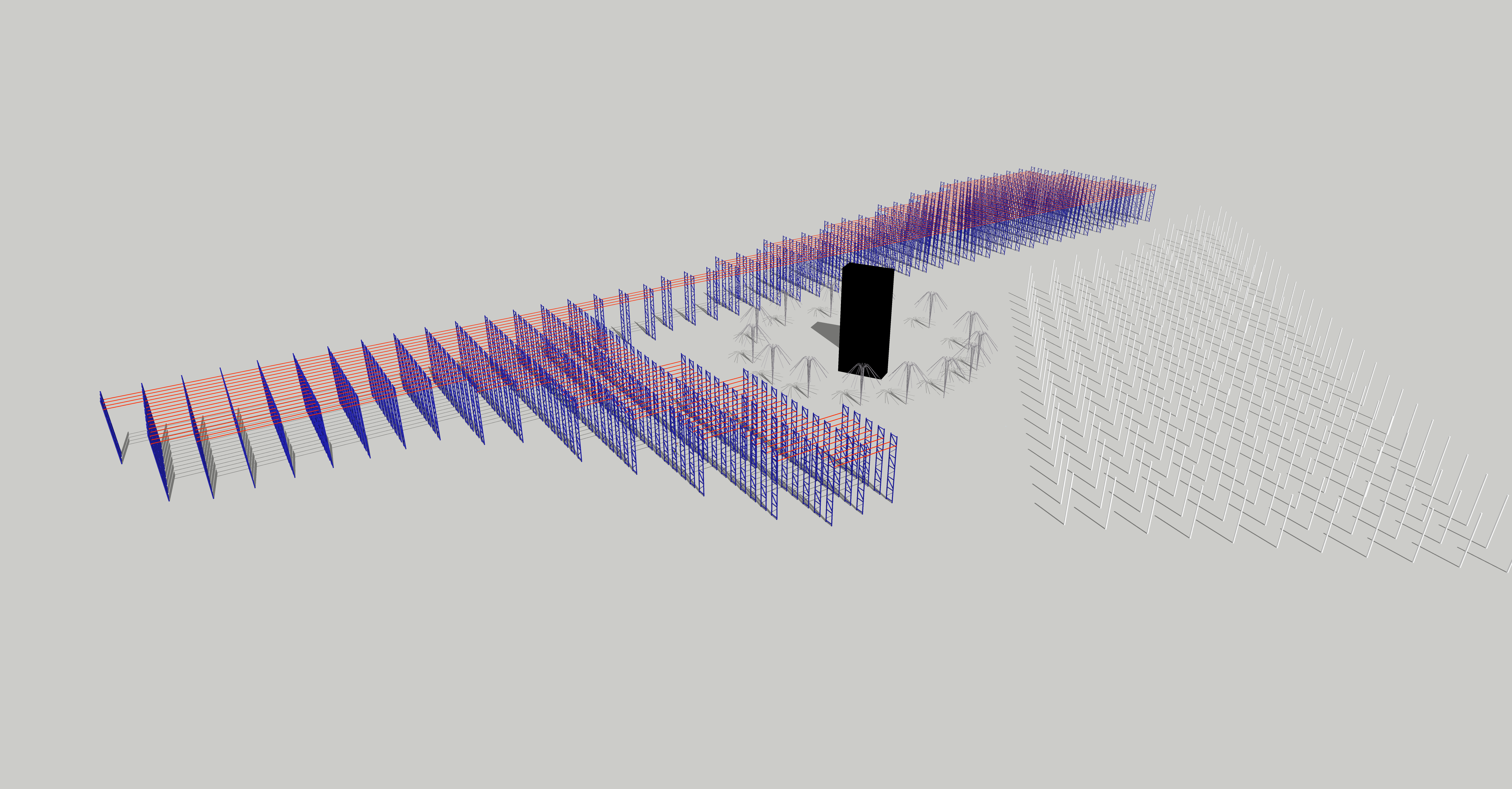
The first step in dealing with such a site was to abandon reason and dream.
Strategies
The raw material was key. In this case it was pallet racks and shipping containers. We explored how to make our own uprights, measured commercially available pallet racks, and made our own CAD drawings. The plan was to cut the steel first and then bend it.
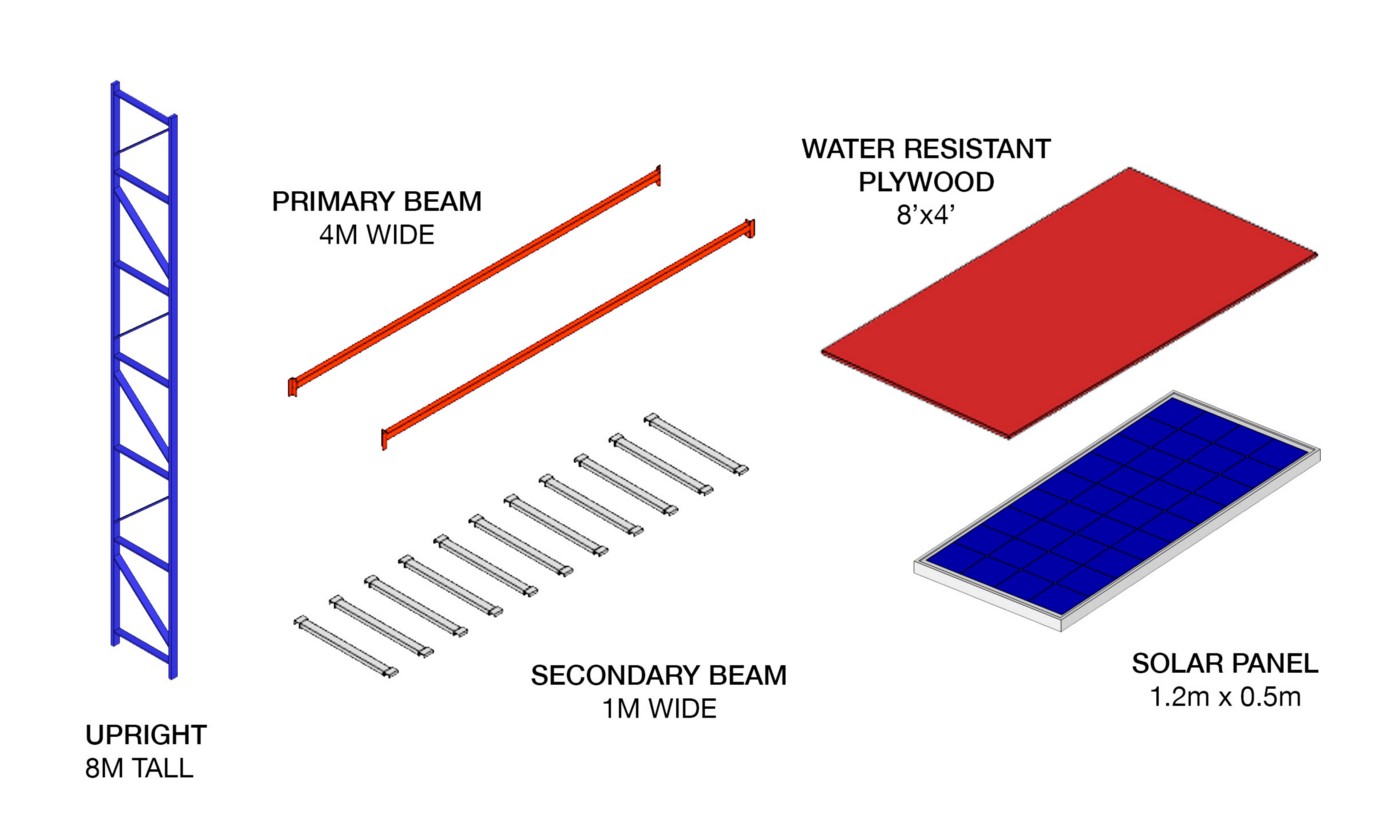
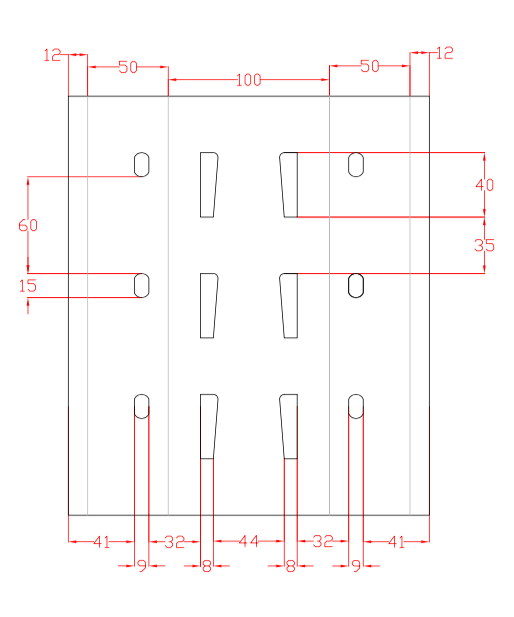
We explored the process of making our own pallet racks.
Social organisation
Much like Burning Man, the intention was to create a central point of focus and branch out from there, slowly forming camps. We intended to have a Build camp, an Ethereum camp, and a Web Development camp. I was supposed to head the Design and Fabrication camp.
The fruit of the exercise of dreaming was the decision that we needed a central point of focus, like the Monolith shown here.
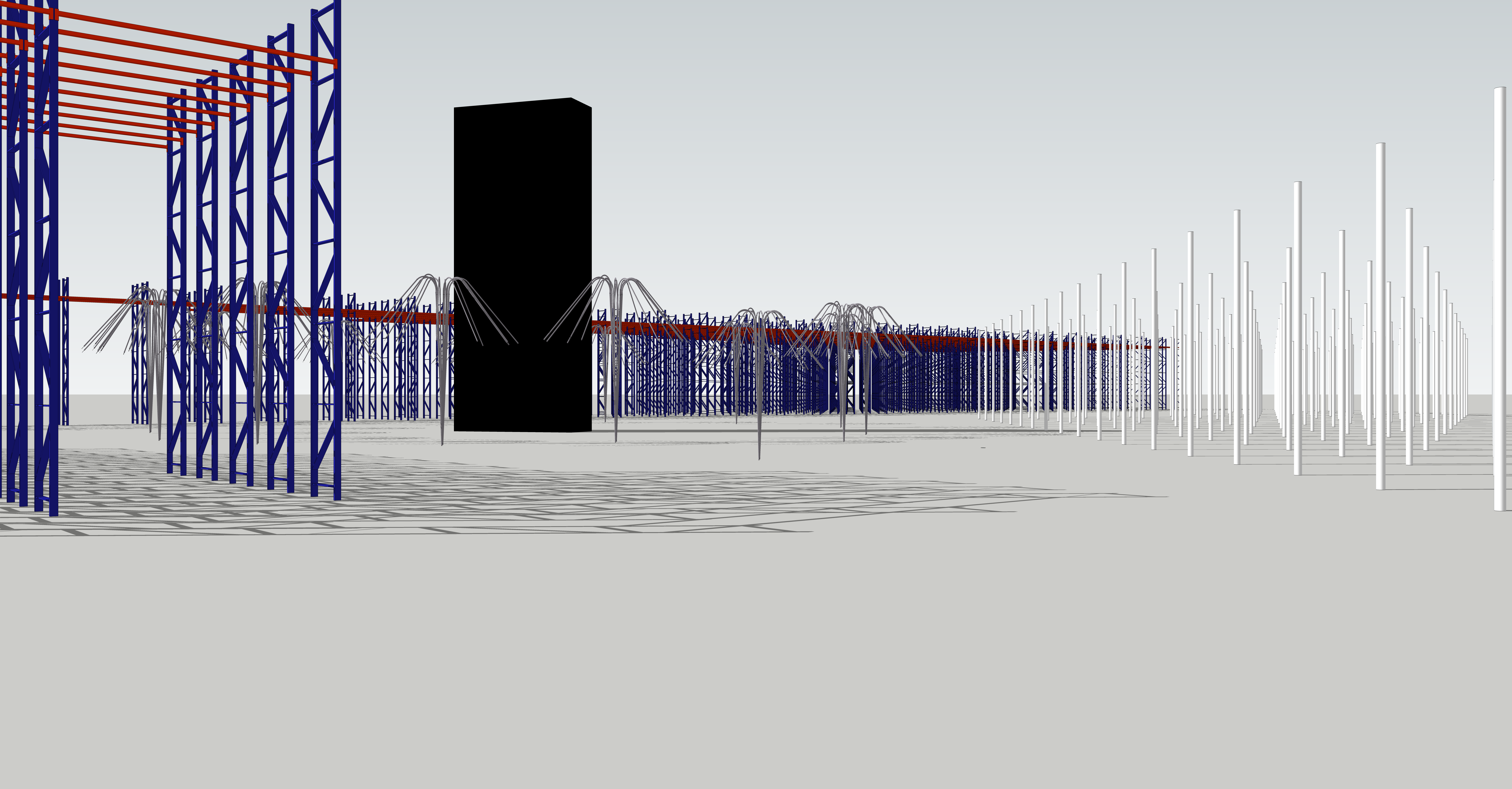
Some over-the-top dreaming
We considered many ideas for the central point of focus, equivalent to the man that burns at Burning Man. As a fan of science fiction, I suggested the Monolith from 2001: A Space Odyssey. In the end, we decided to centre our camps along a strip of pallet racks to be used as office space.
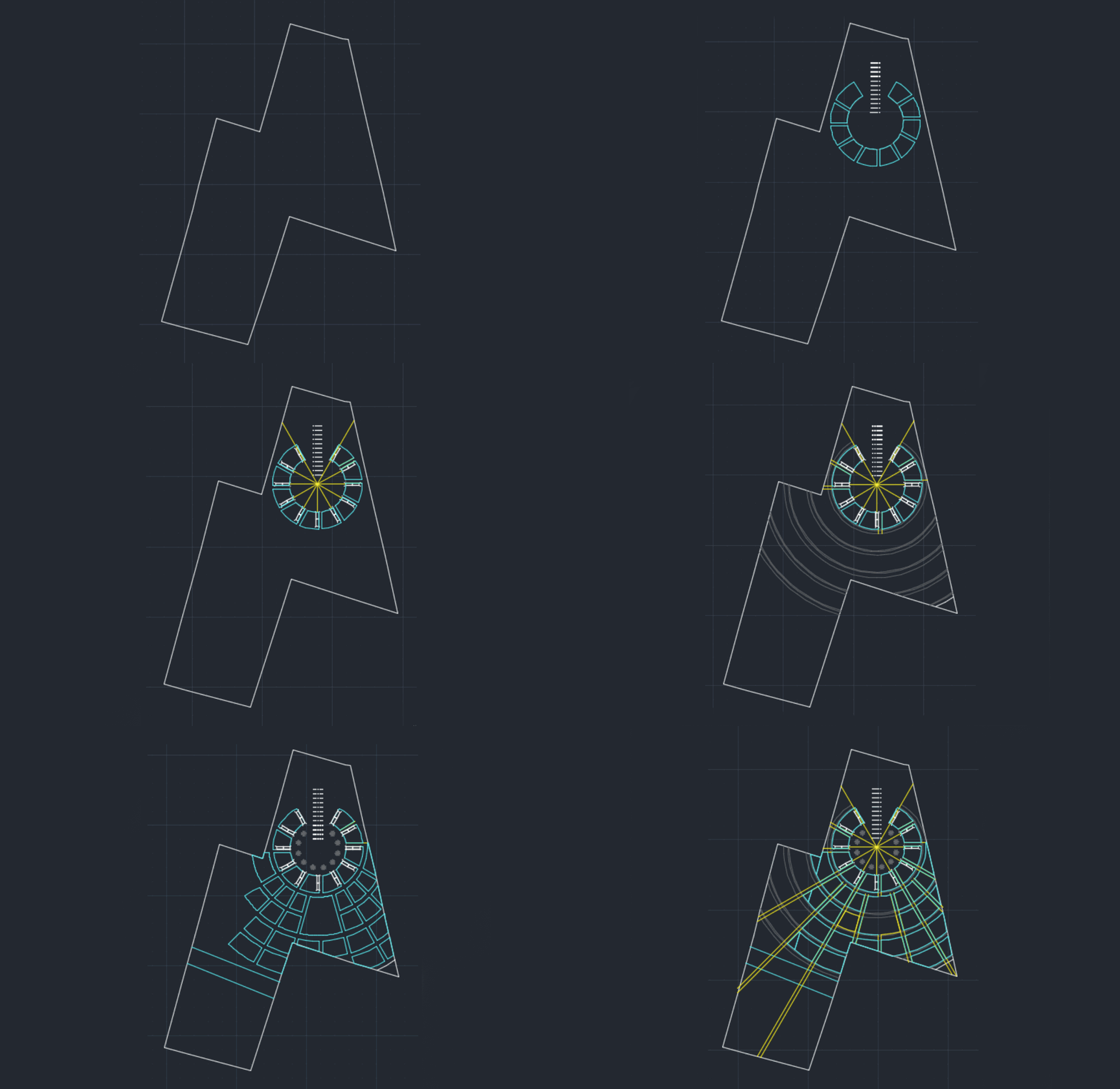
Our intention was to build ten founding camps, occupying spaces one to ten on the clock.
Attempts at off-grid sustenance
We planned for off-grid sustenance, with ideas for solar power and handling waste with PVC barrels. The aim was to make mobile compost toilets that a forklift could move away from the main camp.
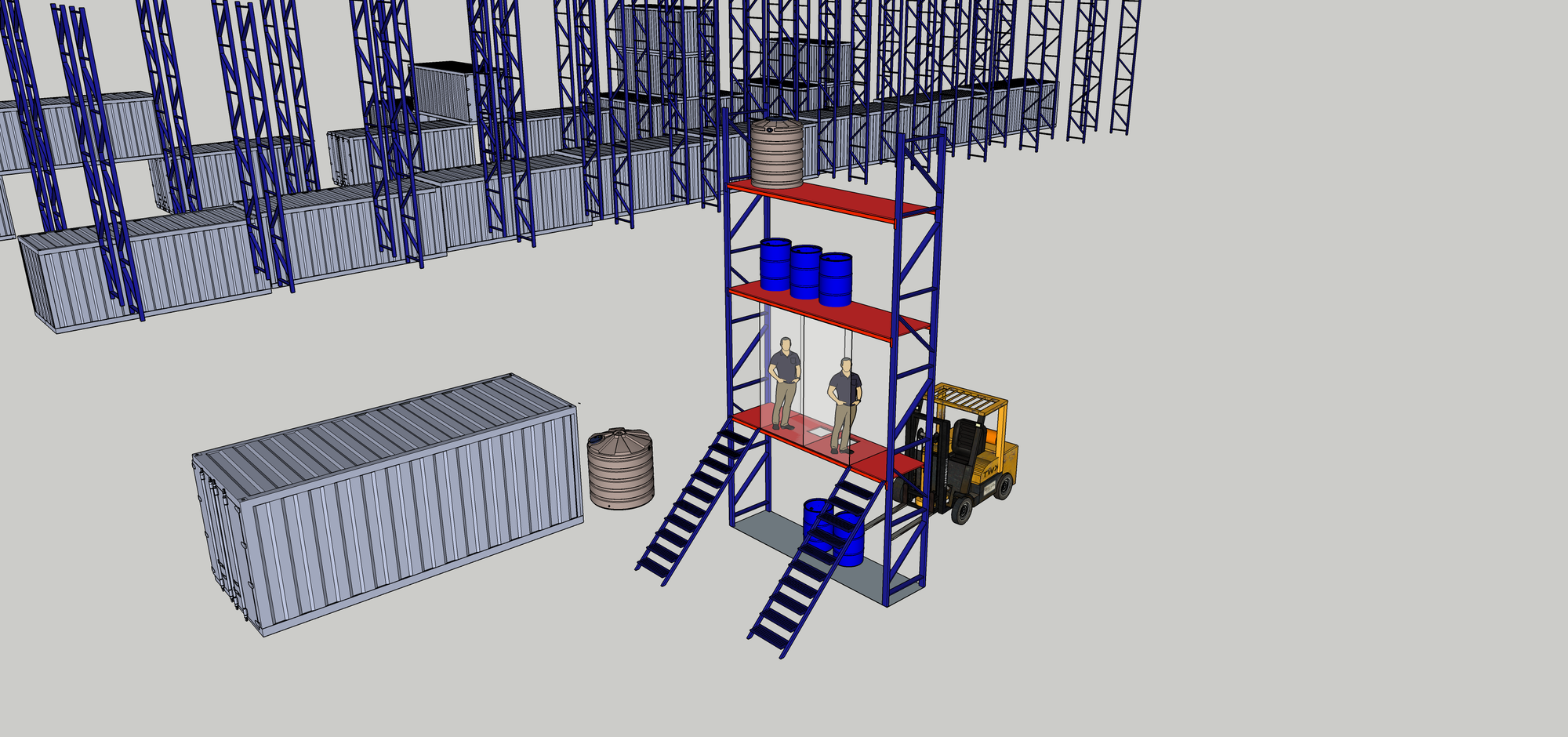
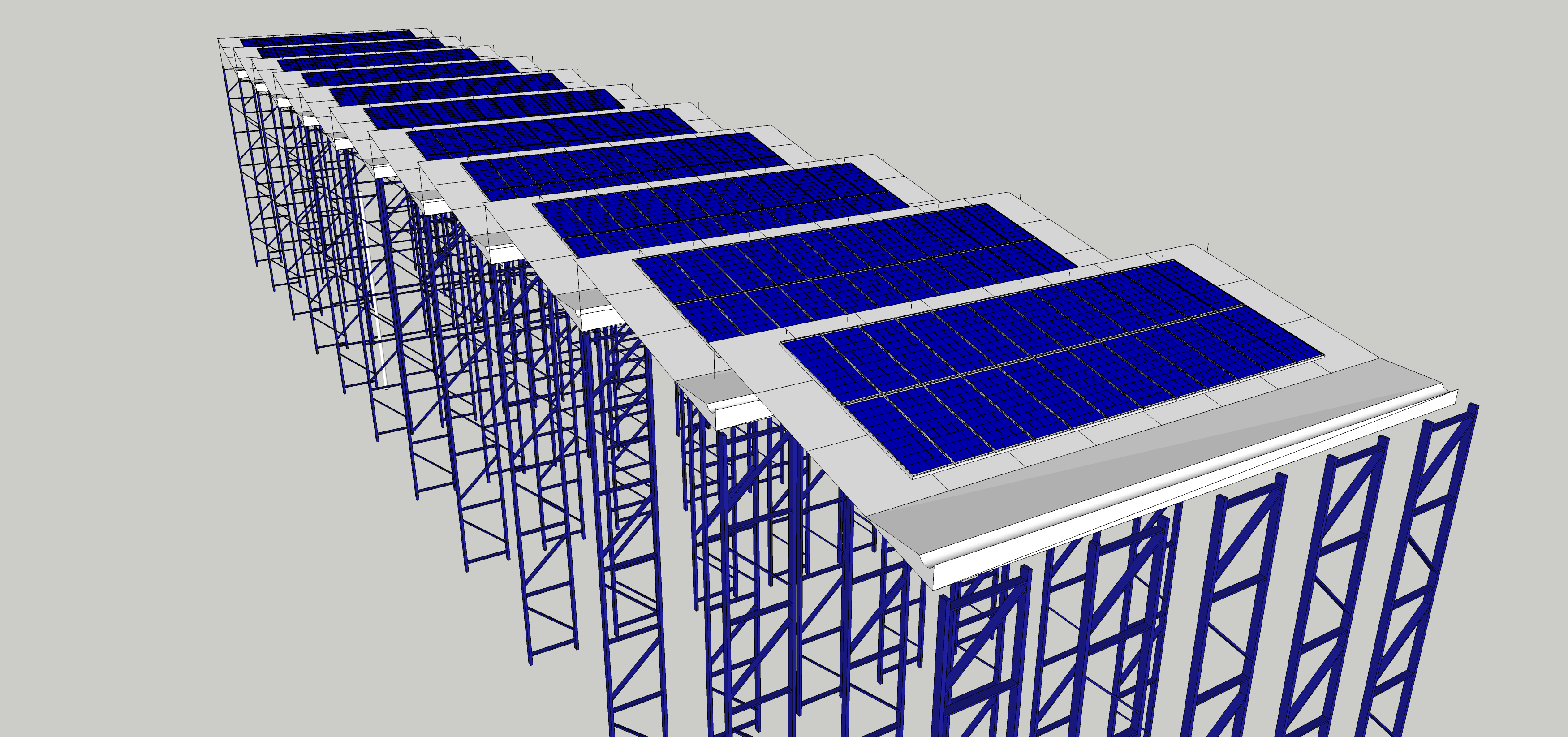
Among our wilder ideas was a way to handle waste on the move. With the return on solar panels getting better, they were also much on our minds.
Cancellation and aftermath
The project did not come to fruition because of factors outside our control. Being nomadic means being flexible about where you are, and not being accepted everywhere. We had a system — an algorithm for occupying any piece of land that became available.
The people at Jaaga moved to a new farm at Guruskool, Chikmaranhalli, in an initiative called Hackerfarm. Maybe one day we’ll get another chance to try something like this at scale.